The deposit
How it is taken, how much it is and how long the refund takes are all shown while you book and repeated on your voucher. It is not a statement of what damage would cost you; the cover level on the car is what decides that.
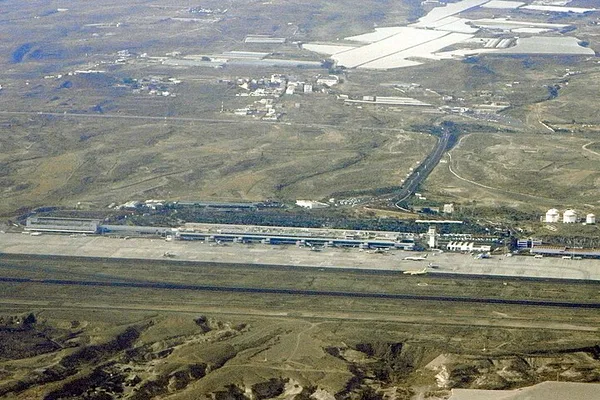
Hire a car at Tenerife South Airport and collect it in the arrival area. The deposit, the cover level and the card rules are on every listing before you book.
Prices are in euros. The deposit and the cancellation terms are shown on each car before you book.
Tenerife South is the island's international door. It opened on 23 October 1978, before which Los Rodeos in the north was the only airport Tenerife had, and it has one terminal, so there is no question of which building you want. Most of what lands here comes from outside Spain, with the United Kingdom and Germany together making up more than half of it.
The handover happens in the arrival area. That is the named place in the booking system and it is the whole of the description: there is no desk with our name on it, no counter, no numbered bay and no office you walk to. Somebody meets you with the keys and the paperwork, and the alternative, if you would rather not carry luggage to a car park at all, is delivery to the address you are staying at, which is how most of the towns on this site work by default. Either way the same three things are settled on the listing before you book: the deposit, the card rules, and the cover level on the car.
In the arrival area, once you are through baggage reclaim. The contact number you give when you book is the part to get right, and it is not a formality: the rental conditions require a reachable number, with the right country code, for the day before pick-up and throughout the rental. That is the single most useful thing you can check before you fly, because a phone that will not take a call in Spain is the thing that turns a smooth handover into an hour of standing about.
How long the whole business takes is decided by the baggage belt, not by the handover. There is no published figure for landing-to-driving at any airport, and the numbers that circulate are guesses copied between websites. What is true is that the number you gave at booking is what the arrangement runs on if the flight is late: the rental conditions require it to be reachable the day before pick-up and throughout the rental, and that is how a changed arrival time gets handled.
The licence card itself, in the main driver's name, with its details in Latin script and an expiry date no earlier than the end of the rental. Copies are not accepted and neither are electronic licences, which catches people out now that so many countries have an app. If your licence is only valid in the country that issued it, an International Driving Permit is strongly recommended and may be asked for. A United Kingdom photocard is in Latin script and is not limited to the United Kingdom, so on the face of the condition it does not need one; if you would rather not have that conversation at the handover, a permit settles it before you travel.
Then the card. Renting may require a physical, embossed credit card in the main driver's name, and where it does, a phone will not do and a family member's card will not do. Some suppliers accept a debit card instead, and where they do it must also be physical, personalised and embossed in the same name; whether yours is one of them is stated during booking and repeated on your voucher. This is the commonest single reason a pick-up fails, so it is worth five minutes now rather than an argument when you land.
The deposit is the other half of the same conversation. How the balance is paid, how much is held and how long the refund takes are all shown while you book and again on the voucher, so nothing about it should be a surprise at the handover. What the deposit is not is a statement of what damage would cost you: that depends on the cover level written on the car itself, which is a separate choice and worth making before you compare two listings on price.
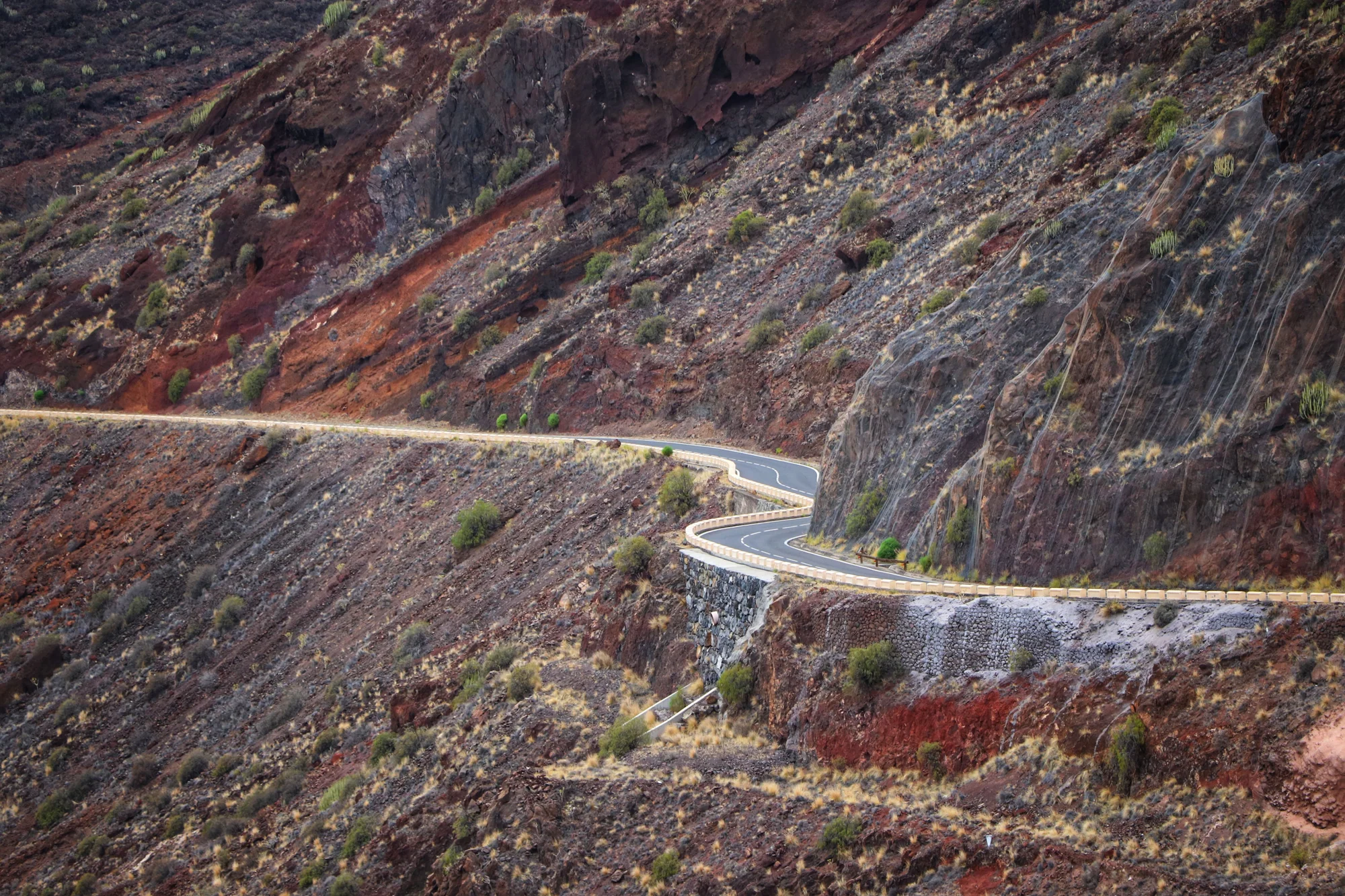
The airport sits on the TF-1, the motorway that runs up the whole south and east coast, and almost everything a visitor wants is a right turn onto it. The road is fast, well surfaced and free: Tenerife has no toll roads at all, which means the only motoring charges you will meet here are fuel, parking and, if you earn one, a fine. There are fixed speed cameras on the TF-1 and on the TF-5 in the north, including an average-speed pair, so the limit is worth respecting rather than estimating.
There is one general car park at the terminal, P1, open around the clock and a few metres from the door, with 2.2 metres of headroom on the covered spaces. If you have booked something tall, that figure matters more than the walk does. For fuel, the Repsol on the airport access road is about four hundred metres away and open all day and night, and there is a BP on the TF-1 about a kilometre and a half north at Carretera Atogo. Returning the car with the same fuel it left with is a rental condition, and the asymmetry is worth knowing: if the tank is lower you pay the difference at the supplier's rate, and if it is higher nobody pays you back.
The nearest town worth stopping in is El Medano, eighteen minutes and six kilometres up the coast, which reads oddly for the distance until you notice that every route in and out of this airport carries the access road and the terminal approach at low speed. Car hire in El Medano is brought to the address you give there rather than met at a point. Playa de las Americas and Costa Adeje are half an hour, Los Cristianos thirty-three minutes. Santa Cruz is an hour, and so is the drive up to Teide.
These are routed free-flow times: estimates that leave out traffic, because the routing does not model it. Check the route on a live map on the day and allow extra time. The climb to Teide is slower than the distance suggests too, because the last half of it is mountain road.
| Destination | Time | Distance |
|---|---|---|
| El Medano | 18 min | 6 km |
| Los Cristianos | 33 min | 19 km |
| Playa de las Americas | 30 min | 20 km |
| Costa Adeje | 30 min | 22 km |
| Playa Paraiso | 37 min | 29 km |
| Los Gigantes | 50 min | 45 km |
| Masca village | 58 min | 52 km |
| Santa Cruz de Tenerife | 59 min | 66 km |
| Teide, the Parador (TF-21 via Vilaflor) | 62 min | 49 km |
| Tenerife North Airport | 65 min | 73 km |
| Las Teresitas beach | 73 min | 75 km |
| Teide, El Portillo (the northern approach) | 76 min | 63 km |
| Puerto de la Cruz | 81 min | 97 km |
Compare the cars available for your trip, then check the payment card and deposit requirements for the one you choose.
Find a carFree-flow driving times from Tenerife South Airport.
No. A rental can start at the airport without having to end there, and dropping the car at a different place is priced on the listing like anything else. Nearly every pick-up point on the island works as a drop-off as well as a collection, the exceptions being Golf del Sur and Guía de Isora, which take cars in one direction only. The common version is leaving from the other airport, because the flights at Tenerife North are mostly domestic, close to half of them inter-island connections, and the supply between the two airports is the deepest one-way arrangement on the island by a wide margin.
For everything else, the rule of the rental is simpler than people expect. The minimum you can be charged for is twenty-four hours, so a car for the morning costs a day. Extending is allowed, but you have to inform the agent in advance. And the car is expected to come back in a state that can be inspected: if it is dirty enough to hide what is underneath, it is washed at your expense.
Almost nothing about the south demands a big car. The TF-1 is a motorway, the resort streets are narrow, and the multi-storey car parks that serve them have height limits in the low two metres. A small hatchback is the honest default, and it is also the cheap end of the list, which empties first in the run-up to Christmas and half term.
The exception is what you plan to do with the middle of the island. The TF-21 up to the crater and the roads west into Teno are long, steep and full of hairpins, and an underpowered car with five adults in it is working hard for most of the climb. Automatics are a minority of what is listed here, so if you want one, book it early rather than hoping. Whatever you choose, remember that hire cars are permitted on paved public roads only, which rules out the dirt tracks that make the prettiest photographs in Teno and Anaga, and that the parts of a car those tracks damage are exactly the parts standard cover leaves out. Driving in Tenerife is mostly motorway and mostly easy; it is the last twenty minutes of a route, on a track or a hairpin, that does the damage.
How it is taken, how much it is and how long the refund takes are all shown while you book and repeated on your voucher. It is not a statement of what damage would cost you; the cover level on the car is what decides that.
A physical embossed credit card in the main driver's name may be required. Where a debit card is accepted it must also be physical, personalised and embossed in the same name.
Minimum age and minimum driving experience are set per car, not per company, and the agent may decline at pick-up if the driver does not meet the requirement for that vehicle.
Offered on many cars and shown on each listing. The count changes, so the search is the only place it is worth reading.
The questions below come up in the arrival area more than anywhere else, so they are answered here rather than left to the rental conditions.
No. The named handover place is the arrival area, and that is the whole description available. You are met there; there is no counter and no office to walk to.
Keep the phone number you gave at booking reachable, with the correct country code: the rental conditions require it for the day before pick-up and throughout the rental.
Ask before you book rather than at the handover. What the conditions do set is that the age and experience requirements are per car and that the agent may decline a driver who does not meet them; whether a second driver is offered, and at what cost, is the supplier's to state on the booking.
Yes. City delivery means the car is brought to the address you give inside that town, and it is the only handover option in most of the places on this site. Whether it is included or charged is set per listing.
No. Tenerife has no toll roads. Fuel, parking and fines are the renter's responsibility, and on this island that clause is really about the last two.
The minimum chargeable period is twenty-four hours, so a morning costs a full day. If you want to keep it longer than booked, tell the agent in advance rather than at the return.