
Car hire insurance in Tenerife
What the standard insurance on a Tenerife hire car covers and leaves out, what the deposit is for, and where the cover levels on each car are written.
Prices are in euros. The deposit and the cancellation terms are shown on each car before you book.
Insurance is the part of a car rental that people agree to without reading and then argue about afterwards, so the standard position is stated plainly here and the car itself carries the rest. It is not a sales page. There is nothing on this site to buy that is not already on the listing.
The one thing worth getting straight before anything else: the deposit and the cover are two different things. The deposit is an amount the supplier holds while you have the car, and how it is taken, how much it is and when it comes back are all shown while you book and again on your voucher; it is also the reason for the card check in the arrival area. The cover is what happens when the car is damaged. The cover that comes with a car from the south airport is stated on the car along with any higher levels it offers, and what the standard level does not include is the whole subject of this page.
What does the standard insurance not cover?
Four things, named exactly: damage to the wheels, the undercarriage, the windscreen and the interior of the car. That is the standard level, and the list is not a summary of a longer one; it is the list.
Read what that means practically rather than legally. Kerbing an alloy in a resort car park is a wheel. A stone thrown up on a mountain road is a windscreen. Grounding the car on a rough surface is the undercarriage, which is why the paved-roads-only condition and this exclusion bite together: the same afternoon can breach both at once. Spilling something across the seats is the interior.
What a higher cover level adds is written on the car rather than here, and it differs from car to car. Many listings carry more than one level, each priced per car, and that is where the answer is written. If a cover level matters to your decision, read it on the car you are actually booking rather than on any website's summary of what cars in general offer.
Is the deposit taken or just held?
The exact amount, the way it is taken, the way the remaining rental cost is paid and the refund timeline are all shown during the booking process and repeated in the rental voucher, so there should be no figure that first appears at the handover. Do not assume it is always a card hold: some suppliers take it in cash, and the booking is where that is stated.
The card itself is the part that catches people. Renting may require a physical, embossed credit card in the main driver's name. A phone will not do, a card in a partner's name will not do, and a virtual card will not do. Some suppliers accept a debit card instead, and where they do it must also be physical, personalised and embossed in the same name; whether yours is accepted is specified during booking and on your voucher. This is the commonest single reason a pick-up fails, which is why it is stated here and again on your voucher rather than being left to the small print.
What do I have to do if the car is damaged?
Two things, and both of them are conditions rather than suggestions. Notify the rental agent immediately, and obtain a police report, unless the agent has agreed otherwise with you. Failing to do either cancels the insurance issued for that car and makes you fully responsible for the damage.
That last sentence is the one worth remembering, because it converts a covered incident into an uncovered one through paperwork alone. Insurance is also invalid where damage comes from intentional vandalism or from neglect, so driving on with a warning light or ignoring an obvious problem is its own risk.
The practical preparation takes two minutes and neither half of it costs anything. Keep the rental agent's contact details somewhere you can reach without the car, and make sure you can take calls, including from Spain, on the phone number you gave when booking: the conditions require that number to be reachable, and the first call is what starts the process at all. Report even a scrape to the rental agent immediately.
The other half is the photographs. Take them at handover, concentrating on the wheels, the underside, the windscreen and the fuel gauge, and keep them until the deposit is back where it came from. The first three are precisely the parts the standard level does not cover, which is why a mark you did not record is the expensive kind.
Where on this island the cover level starts to matter
Not on the TF-1. The motorway that runs up the south and east coast is modern, wide and free, and the driving on it is the least eventful part of any Tenerife holiday. The risk is concentrated on a handful of roads, and they are the ones people specifically hire a car in order to drive.
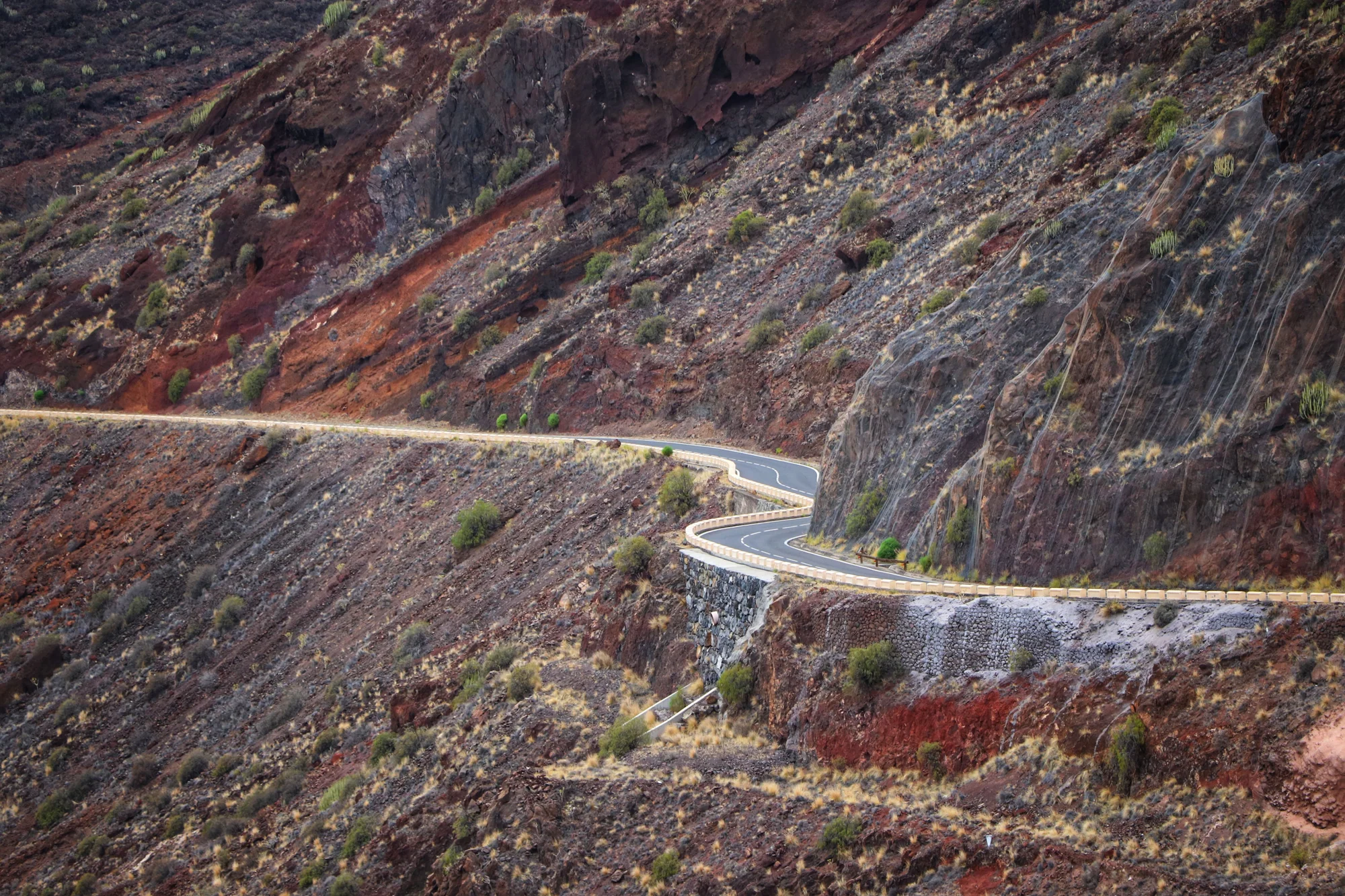
The west is where it bites. The roads where the cover level starts to matter run out of Los Gigantes into Teno, where the tarmac is narrow, the drops are real and the tracks that branch off it are outside the rental agreement entirely. The climb to the Teide crater is the other one: long, high and mountain road for much of the way. On both, damage to a wheel or the windscreen is a plausible risk rather than a theoretical one.
Beyond the car itself, fuel, parking and fines are the renter's responsibility. Tenerife has no toll roads at all, so on this island that clause is really about parking meters and about the fixed cameras on the TF-1 and TF-5, including an average-speed pair. Paying a fine is yours rather than the supplier's. All of this sits inside the rental conditions these bookings run under, which are reproduced in full rather than summarised.
Your dates. Your starting point.
Compare the cars available for your trip, then check the payment card and deposit requirements for the one you choose.
Find a carFree-flow driving times from Tenerife South Airport.
Useful answers
These are the questions that decide whether a booking goes smoothly, so they are answered here rather than in a document nobody opens.
Does the standard insurance cover the tyres?
The standard level excludes damage to the wheels, the undercarriage, the windscreen and the interior. That is the exact list, and it applies to the standard level rather than to every level offered.
Can I buy a higher level of cover?
Many cars offer more than one level and each is priced on the car itself. What a higher level adds varies from car to car rather than having one answer that would hold across the site.
Is the deposit what I would pay if I damaged the car?
No. The deposit is an amount the supplier holds for the length of the rental, and its size, how it is taken and its refund timeline are all shown before you book. What damage would cost you depends on the cover level on that car.
Do I have to call the police for a small scrape?
For an insured event, yes: notify the agent immediately and obtain a police report unless they agree otherwise. Skipping either step cancels the insurance for that car.
Should I buy separate car hire excess insurance?
That is a question for your own insurer, and this site cannot answer it. The cover level is chosen on the car itself, and what a claim under it would cost is not a figure any listing states.
Are there any toll roads to budget for?
No. Tenerife has no toll roads. Fuel, parking and fines are the renter's responsibility, and the last two are what that clause means in practice here.